|![[Search]](http://talks.cam.ac.uk/images/search.gif?1209136071) |
|![[A-Z Index]](http://talks.cam.ac.uk/images/az.gif?1209136071) |
|![[Contact]](http://talks.cam.ac.uk/images/contact.gif?1209136071)
||![[University of Cambridge]](http://talks.cam.ac.uk/images/identifier2.gif?1209136071) |
COOKIES: By using this website you agree that we can place Google Analytics Cookies on your device for performance monitoring. | ![[Talks.cam]](http://talks.cam.ac.uk/images/talkslogosmall.gif?1209136071) |
University of Cambridge > Talks.cam > Craik Club > Disturbing vision: neural efficiency, haemodynamics and homeostasis
Disturbing vision: neural efficiency, haemodynamics and homeostasisAdd to your list(s) Download to your calendar using vCal
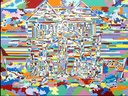
If you have a question about this talk, please contact John Mollon. People show consistency with respect to the images that they judge to be uncomfortable. The discomfort can be predicted from the statistics of the image; this applies to images ranging from photographs of everyday scenes to modern art, and to geometric arrays, coloured or in motion. Images are generally rated as uncomfortable to view if the statistics depart from those that occur in natural images in respect of luminance, chromatic contrast and variation in time. For the same variety of images, those that are uncomfortable result in a large cortical haemodynamic response, possibly reflecting an inefficiency of neuronal processing. The discomfort can be understood as homeostatic, and also as an evolutionary adaptation because images of venomous animals have the statistics of uncomfortable images and are indeed uncomfortable to view. There are far-reaching implications for design because much of the modern urban environment has features that are uncomfortable. Individuals with migraine are unusually sensitive to uncomfortable images. Individual differences in the size and time-course of the haemodynamic response in migraineurs appear to reflect a cortical hyperexcitability. The abnormality can be reduced using coloured filters, provided the filters have an appropriate, individually selected colour. This finding indicates that tinted spectacles may be of use in a variety of neurological conditions in which the visual cortex is hyperexcitable. This talk is part of the Craik Club series. This talk is included in these lists:
Note that ex-directory lists are not shown. |
Other listsCentre for Intercultural Musicology at Churchill College General talks Machine Learning Summary Horizon: Bioengineering israelOther talksHow to write good papers Respiratory Problems A lifelong project in clay: Virtues of Unity Accelerating the control of bovine Tuberculosis in developing countries Constructing the virtual fundamental cycle Coin Betting for Backprop without Learning Rates and More Protein Folding, Evolution and Interactions Symposium The role of the oculomotor system in visual attention and visual short-term memory Speculations about homological mirror symmetry for affine hypersurfaces Finding meaning in English writing |


 Monday 14 January 2013, 13:00-14:00